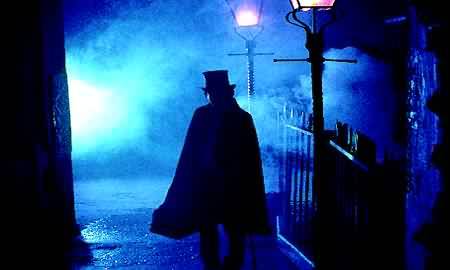
Yet another bloodsucker dressing-up to play the Glamour game.
I think the motto of recent living for me could be DOWN WITH THE TROLLS & GREY VAMPIRES, BUT ABOVE ALL, DOWN WITH THE PSYCHODRAMA DEMONS. What’s these here Grey Vampires and Trolls? K-punk outlines the concepts:
Grey Vampires are creatures who disguise their moth-greyness in iridescent brightness, all the colours of attractive sociability. Like moths, they are drawn by the light of energetic commitment, but unable to themselves commit. Unlike the Toll, the Grey Vampire’s mode is not aggressive, at least not actively so; the Grey Vampire is a moth-like only on the inside. On the outside, they are bright, humorous, positive – everyone likes them. But they are possessed by a a deep, implacable sadness. They feed on the energy of those who are devoted, but they cannot devote themselves to anything. (K-Punk)
Psychodrama Demons are somewhere in-between a Grey Vampire and a Troll. A Grey Vampire appears somewhat romantic at times, caught in a melancholia, only able to live vicariously through others, even as their mode-of-being sucks away at the marrow of life, draining those around them. A Troll is more outright aggressive. As K-Punk writes, a Troll “above all wants to waste time, its libido involves a banal sadism, the dull malice of snatching people’s toys away from them” (K-Punk).
Grey Vampires don’t feed on energy directly, they feed on obstructing projects. The problem is that, often, they don’t know that they are doing this. (That’s one difference between them and a troll – trolls usually aren’t under any illusions about themselves, they just find spurious justifications for their activities.) […] the Grey Vampire is also a subject position that (any)one can be lured into if you enter certain structures. (K-Punk)
Certain structures include academia for k-punk, and many postgraduate students are Trolls, refusing to take positions, offering instead a constant barrage of critique without ground (oh, I know). But one could begin a list almost neverending of such “certain structures”: non-profits, start-ups, volunteer organisations, and of course, most corporate environments. After some consideration of management languages and hierarchies, it would appear that there be a third subject position between hideous Trolls and Grey Vampires worth investigating: the Psychodrama Demon. While the Grey Vampire might not know of their energy-sucking existenz, and while the Troll knowingly ignites a disastrous civil war amongst inhabitants (usually behind the cover of anonymity, sneaking away under cover of darkness as the flames fan higher & higher), the Psychodrama Demon turns every point of difference into a contest of wills, a battle of personalities. Everything is at stake with a Psychodrama Demon. It’s not only that they cannot appreciate another’s opinion; the real issue is that Psychodrama Demons don’t even notice that there are others around them. A demon doesn’t recognise others. Those other meaningless bodies are tools for use, not fellow travelers in Hell but a slave force of the Damned just waiting to be set to work under their auspices. Which is why any point of difference immediately becomes Psychodrama; for a minion to respond to a Demon calls into question the self-evident (for them) Master/Slave relationship that is the basis of their self-worth and existence. This is also why we have Psychodrama: because any point of resistance calls into question their self-confidence as beings, given that all other beings around them are reduced, in a demonstratively Kantian way, to means for their own nefarious ends. In short, Psychodrama Demons act with more potent violence than Trolls, for they stake their very being in being able to manipulate and control others through such brute means that one would usually think that no one would fall for it. Unfortunately, usually there is no choice in the matter. Psychodrama Demons are often so-called captains of knowledge, academia and industry. If in a leadership position, they are bottlenecks. Everything must go through them. They act as if they took Edward Gordon Craig’s theories of acting as a philosophy-of-life: those around them must be pulled with strings, mere instruments, as if “Uber-marionettes.”
Whenever I have someone write to me with the conversation-killer “I have real concerns with XYZ you’ve writ/said…”, I know two things: (1) this person believes that their real concern is at all a concern of mine; (2) this person believes that they exert power over me, and now we have to deal with an exercise in their attempt to exert it, i.e. I have to sit down and deal with it as if it mattered to me as much as it does to them; and that thus (ergo sum) this person be a Psychodrama Demon.
Of course such assessment calls to mind the classic work of Adorno & Horkheimer in The Authoritarian Personality, to which Brian Holmes has gone one step further, and combined the sociological analysis of power with the economics of precarity, naming something he calls (in Unleashing the Collective Phantoms) the “Flexitarian Personality.” As Holmes writes:
To grasp the way this hegemony [flexible accumulation – the subordination of social life to economic globalization – tV] is experienced by individuals, I have proposed the notion of the flexible personality. It is an ambiguous notion, because it designates both the managerial culture that legitimates the globalized economy, and renders it tolerable or even attractive for those who are its privileged subjects, as well as the “flexible” nature of a workforce that is subject to increasingly individualized forms of exploitation. In other words, the flexible personality designates the lived experience of a relation of domination. (Brian Holmes, Unleashing 59)
What is devilish (indeed) about the Flexible Personality is its Manichean structure, by which I mean devilishly dualist: both Master and Slave are caught up in this flexitarian regime. The Flexible Personality is precisely the managerial culture in which Grey Vampires, Trolls and Psychodrama Demons thrive. They thrive because – and I think this remains important for a basic faith in human kind (and not mauvais foi, in Sartre’s sense) – such devilish personalities are seduced, as if by the power of the Glamour which vampiric TV shows such as True Blood exploit (and to such lovely results). We can even call such glamour the Glamour of Globalization; all those expansive, vast networks, available for the biting & sucking (if one be a Grey Vampire), for the destroying (a Troll) or the controlling (mais oui, the Psychodrama Demon).
So the flexitarian system appears attractive, and to those that jump hell’s bells for it (the Sociopaths, to use the previous post’s language from Venkat), they are rewarded in kind, but only at the expense – and here our devilish theme continues – of their soul. The Glamour works upon those in the Slave position of this power relation, of course; in believing they might achieve such status, or in being the kind that likes being bitten & sucked off of their energies, those that do battle with Trolls, or attempt to stand-up to Psychodrama Demons… such positions engage in the game, this Hell which all are playing out, this fantasy land of mytho-economics that is the mechanic of servitude, ultimately, for all. Holmes’ great insight here is that the flexible aspect of the workforce is “subject to increasingly individualized forms of exploitation.” In short, it’s not a one-size-fits-all solution. You too can have your individualized relationship to the abstraction of capital; you too can find your own personal Hell.
The question is how to get out of it, which brings us to two points, both of them courtesy of Paolo Virno. The first is that our concepts deployed here are empty. Like multitude, they have no (ontological) content. By this I mean there is no essence to these devilish subjects. The multitude is not inherently revolutionary just as authoritarian leaders are not inherently Psychodrama Demons. That said, it be the intersection of the complex of desires that make up my being, the economic position I find myself perched within (precariously, it would appear), and the exit strategies I can see that make up what I become in this anthronomics of the subject/precariat. And exit strategies become increasingly important, which brings us to point two: exodus. How does one flee from this scenario? As Venkat writes, we are nearly in a no-option, No Exit scenario (Sartre would be happy):
While the thought of exodus as a strategy is appealing, we have to keep in mind one harsh fact. The real economy requires people to earn paychecks to pay the rent. A job isn’t a “nice to have” part of life like Facebook, but a “must have,” at least for now. And while I am among the most ardent champions of cloudworking and free-agenting, I am also pragmatic enough to recognize that the economy doesn’t really provide support for exodus as a strategy on any significant scale.
At least not yet. (Venkat)
As I writ in a comment to Venkat, which I will repost here as a comment to this post for posterity, exodus is already under way. There might not be an easy exit, and there is never a way to merely pick-up and exist “outside” of any system. But by outlining the contours in which we find our servitude, at least we can face up to the age-old problem Spinoza so aptly laid out for us, by marking out not only the “one man” we might be serving, but the “one man” – the Last Man – that hides within all of us, that Grey Vampire/Troll/Psychodrama Demon waiting to take hold, seductive and desperate, which is not an exit strategy, but a Personal Hell waiting for you, individualized, this salvation by servitude:
Granted, then, that the supreme mystery of despotism, its prop and stay, is to keep men in a state of deception, and with the specious title of religion to cloak the fear by which they must be held in check, so that they will fight for their servitude as if for salvation, and count it no shame, but the highest honour, to spend their blood and their lives for the glorification of one man. (Spinoza, Preface to Theological-Political Treatise: 3)
over & out ./.
Tags: anthronomics, exodus, fear, grey vampire, precarity, psychodrama demon, troll, Virno
.tinyUrl for this post: | https://tinyurl.com/y2h28gcg .


 RT
RT 
Re/posted comment from: [ http://www.ribbonfarm.com/2010/01/13/conceptual-metaphors-mashable-gervais-principle-fugitive-philosophy/ ].
==
Exodus is a contentious strategy if seen as one. And the references certainly become Biblical. Indeed.
In one way, exodus is the general malaise of democracy. Most of us don’t vote and don’t care, for example. This kind of exodus from participation can be seen in two ways. In one way, it signals that conventional involvement in political life is falling apart. Democracy itself might be at stake. But in another way, it signals that people are making-do in other ways. That by exiting en masse from political life, they are creating networks and ways of coexisting in their own manner (and the Net has much to do with this).
As for work, you are absolutely right. One needs to work and exodus is something of a privilege if thought as ‘leaving one’s job’. But exodus can be more subtle, in the sense that the Checkout Losers have invested meaning in their lives somewhere other than work, and are willing to sacrifice work, and its monetary reward, in order to live otherwise.
I live in a ski bum town at the moment, one about to be overrun by the world — yes, Whistler, heart of the Olympicon. And here exodus is the modus operandi of the workforce. Bums since time immemorial have drifted off when the big machine comes in, or the boss demands too much. Quite simply, the possibility of picking up and going elsewhere is the main trend of economic activity here for Losers. The local economy itself recognises this; it’s called the “seasonal workforce.” But what is also interesting about exodus in this manner is that other values beside work mean more for many people in a place such as this. Outdoor activities, and life itself, has more value than having a lot of money.
There is a paradox of course; Whistler is increasingly prohibitive to live in. A recent study (see the Pique January newspaper) shows that 85% of Whistler residents don’t make enough money to cover their living costs. That number corresponds with the number of seasonal workers. Most people working here technically live below the poverty line (though in Western comfort), and earn less so they can, usually, ski more.
Of course at some point, it all caves in, and either you ‘grow up and get a real job’ or become the toothless hippy living in a shack in the woods (a lot of those dudes have been kicked out by the military with the Olympics comin’).
Or you find some kind of way to make it work — that dream exodus job, as a pro snowboarder, photographer, in the outdoor industry somehow, that kind of thing, where work and life mesh. Where your job is something you love.
In Italian Autonomist thought, such as that of Paolo Virno, exodus is the general response since the ’90s of the worldwide workforce to increased demands on their time for a decreasing average wage. Mass amounts of people check-out in many ways. Heck, what we’re really talking about what was picked up by Douglas Coupland in -Generation X- and Richard Linklater in -Slacker-. A kind of drifting-away from exhausting demands toward living life the way one wants it, now, in whatever meaningful one can find.
Of course to engage in exodus on this level means that one already inhabits a fairly privileged sphere of existence. Most of the world is still trapped in slave labour factories, without any of the complex relations of the Gervais Principle at stake; most of the world is hungry, and getting by any way they can.
But perhaps the West’s exodus opens the territory for the great flood of the world’s underdeveloped.
mauvais foi (Psychodrama Demons) « fugitive philosophy > http://bit.ly/8qlV7W
@kpunk — a new one for you — the Psychodrama Demon joins the Trolls & Grey Vampires posse / http://bit.ly/8qlV7W
As long as you’re playing with all these categorizations, it’s worth remembering what I consider a classic example, in Umberto Eco’s Foucault’s Pendulum, classifying people as cretins, fools, morons or lunatics.
http://www.dyscordia.nl/articles/61/cretins_fools_morons_and_lunatics.html
In terms of Venkat’s corporate structure, basically lunatic=Sociopath, fool=Loser and moron=Clueless. In terms of Daemons and Vampyres I’m not sure, when you bring in the supernatural we’re probably moving outside the bounds of mere logic. Could there be a a fourth category of Magicians who transcend the limitations of the three others, and is this where we can start to talk about exodus?
Or maybe they’re just cretins.
Heh, I reread that passage again from FP. Thanks for that. I do feel I should clarify a few things.
It’s tempting to think demons, trolls & vamps are mere playful categories, and indeed they are, but they’re also grounded in some fascinating research, both coming from management theory (Venkat) and political theory (k-punk’s work). In a way, by adding a fictional spin to the understanding of subject-positions — ie speaking of vampires, trolls, demons — one is also revealing the genesis of such figures in the popular imagination. Vampires especially have a history in writings on capital, dating back to Marx himself, who uses a number of vampiric metaphors to describe the “vampiric” or “parasitic” relations of capital. The popular resurgence of this discourse was launched by Derrida who, in -Specters of Marx-, spent some time tracing the way in which the language of spirits, ghosts and vampires in Marx’s discourse is more than just a rhetorical flourish, but functions as a logic of what Derrida calls “hauntology.” This is another way of demonstrating that there is no ontological basis of presence, or nonparasitical ground, to which capital would be a parasitism — in short ontology itself is already hauntology, already simulacra, and so forth. The implication is that capital does not come from without, but is integral to the structure of the system within, all the way through to the hauntological level. It gets more interesting than this, in terms of effects for such incorporation theory when thinking of political programs that would go forward from this position (which would perhaps deconstruct left/right political spectrums), but that’s the nut of it. The next step was this language of hauntology and its basic precepts being picked up by the likes of k-punk, who expanded the use of hauntology in his writings on capitalist realism (now out as a book on Zero Press).
So the use of grey vampires, trolls and psychodrama demons is part speculative theory but also part post-Freudian use of deconstructive archetypes to talk about subject positions within the system of global capital. Like Eco’s morons, lunatics and so on, grey vampires, trolls and demons are subject positions one can fall into, or rather be seduced by. But unlike Eco’s archetypes, the work I am pursuing here only considers such subject positions as contingent upon frameworks of life and work. In this sense, they are critical assessments of contemporary labour conditions under capital, with parallels in other fields such as sociology and political economy (especially in flexitarian or precarious labour). Eco’s use of his human archetypes, on the other hand, seem to operate in a kind of nebulous way, without reference to a system of economic exploitation which would make such archetypes preconditions for being-in-the-world. Which is fine; but in this sense I do not think that Eco’s archetypes can be related to Venkat’s. Sociopaths are much more complex than lunatics; as Eco says, lunatics are morons without a functional logic. Au contraire, Sociopaths are highly functional in capitalist systems. And being a Loser does not necessarily mean being a fool, in the sense of saying the wrong thing at the wrong time, as all Sociopaths begin as Losers, and Sociopaths master the language of Powertalk. Losers are a category without content, in a sense, the great multitude, and the position of Loser has more to do with an economic categorization.
As for exodus, I do not think any transcendence is needed. Indeed, most Losers are Losers precisely because they do not invest in (corporate) work, and instead are operating a life elsewhere that, for them, has more significance, even if it has not economic value. In short, such Losers appear as such to corporate Sociopaths, but in other qualitative (and usually not quantitatively-assessed) circles, they might be revered, well-respected beings. For example, the dude who works a dayjob at the gas station might be the city’s best tango dancer at night. In ski towns, such positions of exodus abound. That Sandwich Artist just might be a deadly rider or a committed mountaineer. And in the gravitas of life, it will be one’s actions and not one’s jobs that define’s one’s being. Such ‘elsewhere’ life opens the stirrings of exodus. Exodus proper occurs when it collectivizes: when such streams of people move en masse toward alternative actions of life that their refuse to measure labour under capital as the ruler of existence produces two effects: (1) a destabilization of the quantitative system; and (2) the generation of a functioning alternative socius elsewhere.
Some forms of technoculture performed exemplary movements of exodus. Some never came back.
[…] tvv, “mauvais foi (psychodrama demons)”, http://fugitive.quadrantcrossing.org/?p=322 2 jercrowle, […]
Now reconsidering whether I've been in the lair of the grey vampires or whether actually it was psychodrama demons . . http://bit.ly/cQ9xEh